Nine to Five

Workwear that actually works

Summer at the Office: Professional in a Heatwave

2026-07-15

Quick Answer: Dress for two climates: breathable natural fabrics for the commute, plus a desk layer (cardigan or blazer that lives at the office) for the AC. Bare legs with an appropriate hemline are standard in most modern offices — the hemline is the variable, not the hosiery. Structured sleeveless tops read professional; spaghetti straps and strapless don’t. Best fabrics: washable crepe, ponte, linen blends and cotton poplin.

You leave the house at 8:15 in 88°F humidity and arrive at a desk where the AC is set, apparently, for a data centre.

That’s the summer office paradox: you’re dressing for a heatwave and an arctic interior on the same commute, while maintaining a standard of professionalism that was written for a climate nobody works in.

Here’s the actual survival guide — the bare-legs verdict, the sleeveless rules, and the two-climate wardrobe that solves most of it.

Summer at the Office: Professional in a Heatwave

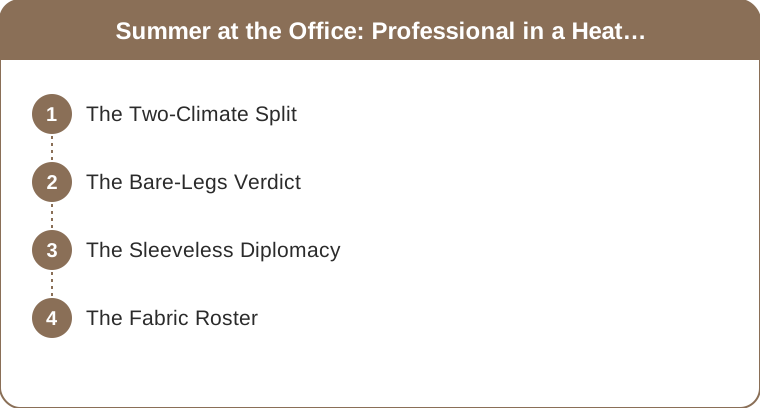
At a glance

How Do You Dress for a Heatwave Commute and Arctic AC?

Split the wardrobe at the lobby door. You’re dressing for two weathers, and trying to find one outfit that handles both is why summer workwear feels impossible.

The commute layer does the heavy lifting outdoors: breathable fabric, loose enough for air to move, light colours, and shoes you can actually walk in.

The desk layer never commutes. This is the doctrine that solves half the season — a cardigan, a lightweight blazer or a structured knit that lives permanently on the back of your chair. You arrive without sweating through it, and you’re meeting-ready in one garment.

Supporting moves:

  • A pashmina or large scarf in the desk drawer, for the days the thermostat gets ambitious.
  • Closed shoes at the desk, sandals for the walk, if your office runs formal and your commute runs long.
  • A wicking base layer under a lined dress or sheath. Unglamorous, genuinely effective.

What’s the Verdict on Bare Legs at the Office?

For most modern offices: bare legs are standard summer practice. The nude-hose mandate retired with the fax machine, and nobody under 50 is checking.

The variable that actually matters is hemline, not hosiery. A knee-length or just-above-knee hem reads professional bare-legged. A short hem doesn’t become professional by adding tights.

By workplace tier:

  • Business casual / creative / tech: bare legs, knee-adjacent to midi hems, no issue at all.
  • Corporate but modern: bare legs fine; keep hems at or near the knee and lean on structured pieces elsewhere in the outfit.
  • Law, finance, government, client-facing formal: hosiery expectations may still exist in specific firms or courts. When in doubt, a midi hem or tailored trousers sidesteps the question entirely.

Practical extras: a light self-tan or leg-balm evens things out if you’d rather, and anti-chafe balm is the summer-skirt product nobody discusses and everybody needs.

Summer at the Office: Professional in a Heatwave

Can You Wear Sleeveless to Work?

Structured sleeveless: yes. Spaghetti straps and strapless: weekend-coded.

The distinction is about how the silhouette reads, not about arms. A sleeveless shell with a proper armhole, a wide-strap column dress, a sleeveless knit with some body to it — all read polished. A thin-strap camisole reads like underwear because structurally it is one.

The reliable test: would this silhouette read as polished in the all-hands photo?

Rules of thumb:

  • Armhole matters more than strap width. A gaping armhole undermines an otherwise professional top.
  • Straps of about two inches or wider are the safe zone in most offices.
  • The desk blazer resolves all ambiguity on big-meeting days — which is why it lives on your chair.
  • Fabric weight carries a lot of the professionalism. Crepe and ponte read more formal sleeveless than thin jersey ever will.

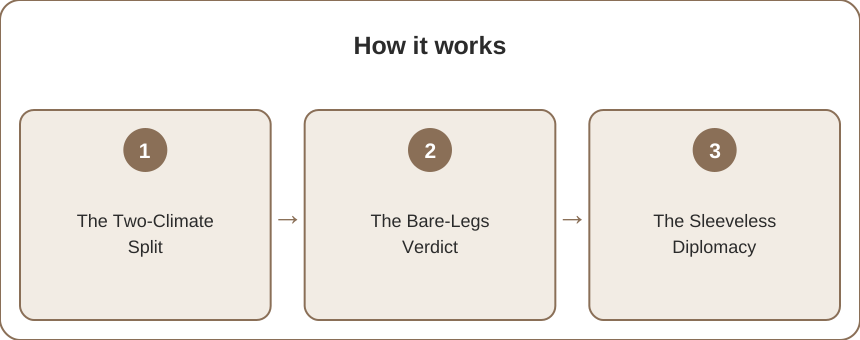
How it works

Which Fabrics Actually Work in Summer Workwear?

The reliable roster:

  • Washable crepe and ponte — the AC-to-street versatiles. They hold structure, resist wrinkling and survive a commute.
  • Linen blends (linen with cotton, viscose or a little synthetic) — the wrinkle-diplomatic tier. Pure linen breathes best and creases loudest; a blend is the office compromise.
  • Cotton poplin shirting — crisp, breathable, and it presses back into shape.
  • Tencel and lyocell — drape like silk, breathe better, and most versions are machine-washable.
  • Lightweight wool — counterintuitive but excellent; tropical-weight wool suiting breathes far better than polyester suiting.

The one to watch: the polyester-lined sheath. It’s a champion in AC and a punishment on the commute. The two-climate wardrobe assigns it to days you drive door-to-door.

Colour note: light colours reflect heat but show sweat; mid-tones and prints hide it better. Navy and black absorb heat but hide everything. Pick your problem.

Can you wear open-toed shoes to the office in summer?

In most modern offices, yes — a closed-back, low-heeled sandal or a peep-toe reads fine. More conservative environments (law, finance, healthcare) often still expect a closed toe, and some workplaces have safety rules that make it non-negotiable.

What can I wear to work when it’s 95 degrees?

A breathable dress or wide-leg trousers in linen blend, Tencel or cotton, in a mid-tone, with a desk layer waiting at the office. Add a wicking base layer if you commute on foot or by transit, and change into your office shoes on arrival.

Are sleeveless dresses professional?

Structured ones are. Look for a proper armhole, straps around two inches or wider, and fabric with some body — crepe, ponte or a substantial cotton. Keep a blazer at your desk for client meetings, and skip anything with spaghetti straps or a strapless neckline.

TL;DR:

  • Dress for two climates: breathable commute layer + a desk layer that never leaves the office.
  • Bare legs are standard in most offices — the hemline is the real variable, not hosiery.
  • Sleeveless works when it’s structured: proper armhole, straps ~2” or wider, fabric with body.
  • Best fabrics: washable crepe, ponte, linen blends, cotton poplin, Tencel, lightweight wool.
  • Keep a blazer, a scarf and office shoes stationed at your desk permanently.
  • Mid-tones and prints hide sweat better than pale solids. Choose accordingly.

Keep Reading

This article is for general styling and informational purposes only. Trends, sizing, availability and pricing may vary by brand and season.

summer office wearprofessional summeroffice dress code

← All articles