Nine to Five

Workwear that actually works

Modern Workwear: Looking Professional Beyond the Suit

2026-07-13

Quick Answer: You can look every bit as professional as a matching suit by using tailored separates and anchoring each outfit with one sharp piece — usually a structured blazer or a genuinely well-cut trouser. Build on a tight palette of 3–4 colors so everything mixes, add personality through accessories rather than silhouette, and prioritize fit over price. Five well-chosen pieces produce more outfits than a closet of options.

The stiff corporate suit stopped being the only route to looking professional roughly a decade ago, and yet plenty of people still default to it because it’s the only formula they trust.

Modern workwear runs on a different principle: polish with personality. Pieces that read authoritative without erasing the person wearing them. It’s not less professional — it’s often more, because a well-fitted outfit you chose beats a uniform you defaulted to.

Here’s how to build it, and why the single most important variable isn’t the pieces at all.

Modern Workwear: Looking Professional Beyond the Suit

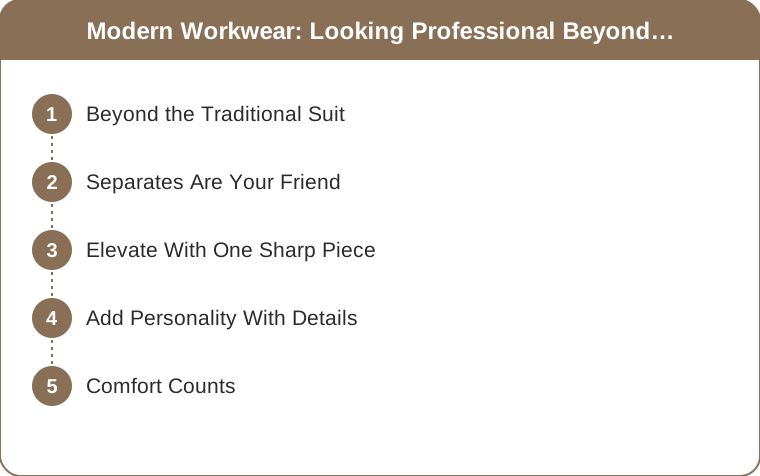
At a glance

What Makes an Outfit Read as Professional?

Strip away the specific garments and professional dressing comes down to four signals, none of which require a suit.

Structure. Something in the outfit needs to hold a shape — a shoulder line, a defined waist, a trouser with a real crease. Structure is what separates “put together” from “comfortable.”

Fit. The strongest signal by a wide margin. A $400 blazer with the wrong shoulder width looks worse than an $80 one that fits. Fit is also the only variable you can buy with alterations rather than budget.

Restraint in the palette. Two or three colors, maximum, per outfit. Professional dressing reads as considered, and considered means edited.

Intentional finishing. Shoes that aren’t scuffed, a bag that isn’t falling apart, hems that hit correctly. These are cheap to get right and expensive to get wrong.

Notice that “matching jacket and trouser” appears nowhere on that list.

Separates Are Your Friend

Mixing tailored separates — trousers, blazers, skirts, knits in different pieces — gives you both flexibility and a more current feel than a matched set.

The math is compelling. Three tops and three bottoms in a coordinated palette produce nine outfits. A suit produces one, plus a couple of variations if you split it.

The rule that makes it work: keep the palette tight. Pick a base of navy, charcoal, or black, add one lighter neutral like cream or grey, and one accent. Everything you own in those four colors will combine with everything else in them, which is the entire trick.

Coordinate formality, not fabric. A blazer and trouser don’t need to be the same material to work together; they need to sit at the same level of dressiness. A structured wool blazer over a crisp cotton trouser reads intentional. That same blazer over a jersey pant does not.

Modern Workwear: Looking Professional Beyond the Suit

Elevate With One Sharp Piece

Here’s the operating principle that carries the whole approach: every outfit needs one anchor.

A single genuinely tailored element sets the formality for everything around it. A structured blazer makes jeans read as smart-casual. Excellent trousers make a simple knit read as deliberate. A well-cut coat carries the whole outfit before you even take it off.

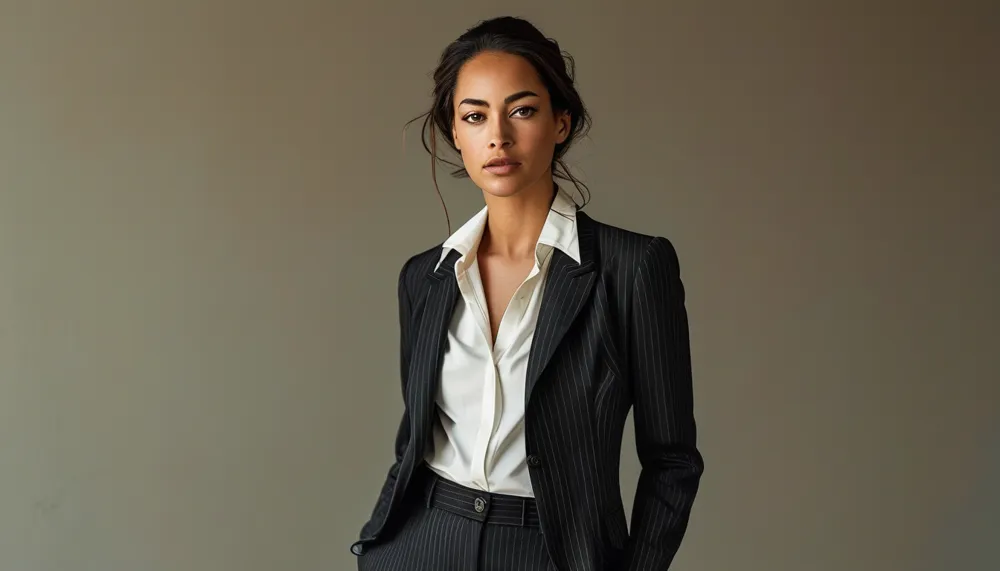
The blazer is the highest-value anchor for most people. It’s the fastest way to make almost anything underneath look intentional, and it works over dresses, knits, shirts, and t-shirts alike.

The trouser is the sleeper anchor. A really good pair of trousers — the right rise, a clean break, fabric with some weight — makes a $30 t-shirt look expensive. Most people underinvest here relative to the return.

Build around the anchor, then keep the rest simple. Two anchors in one outfit start competing.

Add Personality With Details

This is where modern workwear separates from the old model. Individuality lives in the details rather than the silhouette.

Accessories carry the most personality per dollar. Interesting eyeglass frames, one strong piece of jewelry, a scarf, a bag with actual character, a watch you like.

One considered color. A rust knit, a forest blazer, an emerald shirt. It reads as a choice rather than a default, and it costs nothing extra.

Unexpected texture. A ribbed knit under a blazer, a suede loafer, a leather-trimmed bag. Texture registers as attention to detail.

Shoes with a point of view. A loafer with a distinctive hardware detail, or a boot with an interesting shape.

The constraint that keeps it professional: one personality element per outfit, maybe two. Bold frames plus a bold color plus a bold shoe is a different kind of statement.

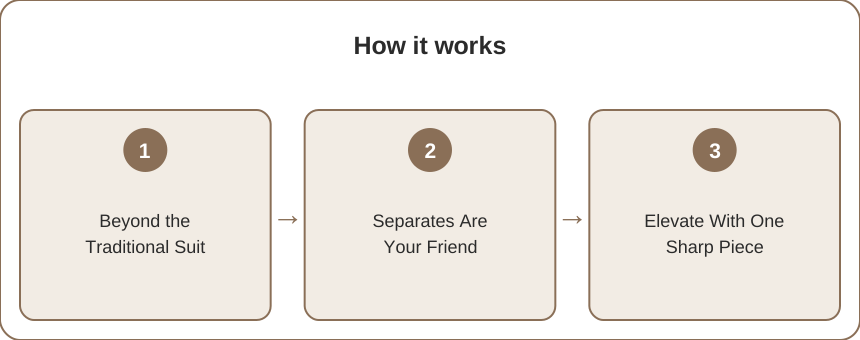
How it works

Comfort Counts More Than It Used To

An outfit you can move and think in beats a beautiful one you’re counting down the hours in. This isn’t a compromise; it’s a performance consideration.

Look for stretch in the fabric composition. A wool blend with 2–4% elastane holds its shape and lets you sit through a three-hour meeting without a fight.

Check the rise when you sit, not when you stand. Most trouser regret happens in a chair.

Shoes you can actually walk in. A block heel or a good flat gets worn constantly; a beautiful uncomfortable heel gets worn twice and resented.

Fabrics that survive a full day. Anything that wrinkles in the first hour is going to look worse at 4pm than it did at 9am.

Comfort supports confidence, and confidence is a large part of what “professional” actually looks like from the outside.

The Five-Piece Starter Framework

If you’re rebuilding, here’s the smallest set that covers a typical week.

One structured blazer in a dark neutral. Two pairs of trousers — one dark, one lighter, both tailored to length. Two knits or shirts in your palette. One dress or skirt that works alone and under the blazer. One excellent pair of shoes.

That’s roughly 12–15 workable outfits, and every addition after that multiplies rather than adds. If your workplace runs casual, swap the blazer for a strong overshirt or a heavyweight cardigan-coat — the anchor principle holds regardless of formality level.

Myth vs Fact

Myth: A matching suit is always the most professional option. Fact: A badly fitting suit reads worse than well-chosen separates. Fit and finishing carry the professional signal far more than whether the jacket and trouser came from the same bolt of fabric.

Myth: You need a large workwear budget to look polished. Fact: You need a small number of pieces that fit precisely. Five well-chosen items plus $100 in alterations outperforms fifteen off-the-rack compromises, and costs less.

Myth: Comfortable means casual. Fact: Stretch-blend wool, a well-designed rise, and a block heel are all comfortable and all read as tailored. The trade-off people assume exists mostly disappeared with modern fabric technology.

Myth: Personality undermines authority at work. Fact: One deliberate element — a color, a frame, a piece of jewelry — reads as confidence. What undermines authority is looking like you dressed by default.

Mini FAQ

Can you wear jeans and still look professional?

In most modern workplaces, yes — with conditions. Dark rinse, no distressing, tailored fit, and paired with an anchor piece like a blazer or a structured knit. The jeans have to be the most casual thing in the outfit, not the average of it.

What is the most versatile workwear piece to invest in?

A well-fitted blazer in a dark neutral. It raises the formality of everything it goes over, works across seasons with different layers underneath, and is the single piece most likely to make an otherwise simple outfit read as intentional.

How do you look professional without wearing a blazer?

Use a different anchor: a structured knit, a well-cut coat you keep on in cooler offices, a sharp trouser with a tucked shirt, or a tailored dress. The requirement is that something in the outfit has genuine structure and precise fit — the blazer is just the most common way to supply it.

TL;DR:

  • Professional reads through structure, fit, a tight palette, and clean finishing — not through a matching suit.
  • Tailored separates in 3–4 coordinated colors give you 9+ outfits where a suit gives you 1.
  • Every outfit needs exactly one anchor piece: usually a blazer or a genuinely good trouser.
  • Personality goes in the details — accessories, one color, texture — capped at one or two per outfit.
  • Prioritize comfort and fabric that survives the day; alterations beat price every time.

Looking professional no longer means defaulting to a plain suit. Build with separates, anchor each outfit with one sharp piece, and let the details be yours — polished, authoritative, and unmistakably you.

Keep Reading

This article is for general styling and informational purposes only. Trends, sizing, availability and pricing may vary by brand and season.

workwearprofessional styleoffice

← All articles